
Resource Depletion Changes the Fight
The Good ShepherdThis flow tracks how fuel, ammunition, and crew endurance turn aggressive tactics into increasingly narrow choices.
increasing Bearing strength in each event
 decreasing
Bearing strength in each eventdecreasingFuel as a Tactical Limit

Fuel as a Tactical Limit
An old naval calculation
George Krause considers fuel before sending ships far from the convoy. High-speed pursuit may consume the reserve needed for a later crisis or for the return to station.
Risk weighed against opportunity
He initially allows James and Viktor to pursue because destroying a submarine could protect the convoy from a larger attack. When the contact proves doubtful, he calls them back rather than spend still more fuel.
A limit that persists
Fuel affects every subsequent choice, especially for James and the corvettes. The enemy can exploit the fact that escorts cannot remain at maximum speed or chase every indication indefinitely.
Depth Charges Run Low
Depth Charges Run Low
Heavy expenditure
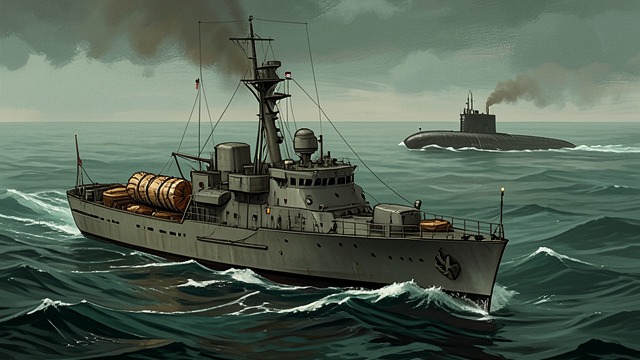
Keeling has used dozens of depth charges in repeated attempts to strike submerged submarines. Each pattern searches a wide area, but most attacks produce no visible result.
The final inventory
Fippler reports that only six charges remain. George Krause ends full patterns and shifts to single charges, accepting a much smaller chance of destroying an enemy.
A new tactical purpose
A single explosion can still force a submarine to evade and delay its attack. The dwindling supply changes success from a probable kill to the more limited objective of keeping the enemy down and away from the convoy.
A Worn Command
A Worn Command
The escorts’ condition
Keeling has only two depth charges, while Dodge and James report serious damage, low fuel, or nearly exhausted ammunition. The escort group has survived, but its ability to fight is sharply reduced.
Fatigue in command
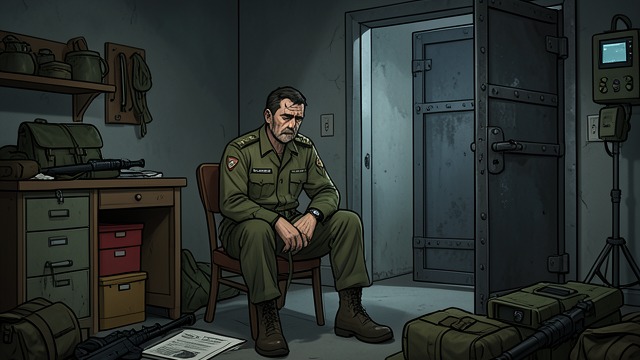
George Krause has spent nearly two days without meaningful rest. He struggles to stay awake and to eat, while still making decisions that may determine whether the convoy reaches safety.
Relief becomes essential
The arrival of Diamond’s group changes the practical limits of the operation. The surviving escorts can finally be reassigned, but their condition shows how close the original force came to exhaustion.
Wednesday morning before Keeling’s first pursuit
Thursday morning after repeated attacks
Friday morning shortly before the relieving force arrives
